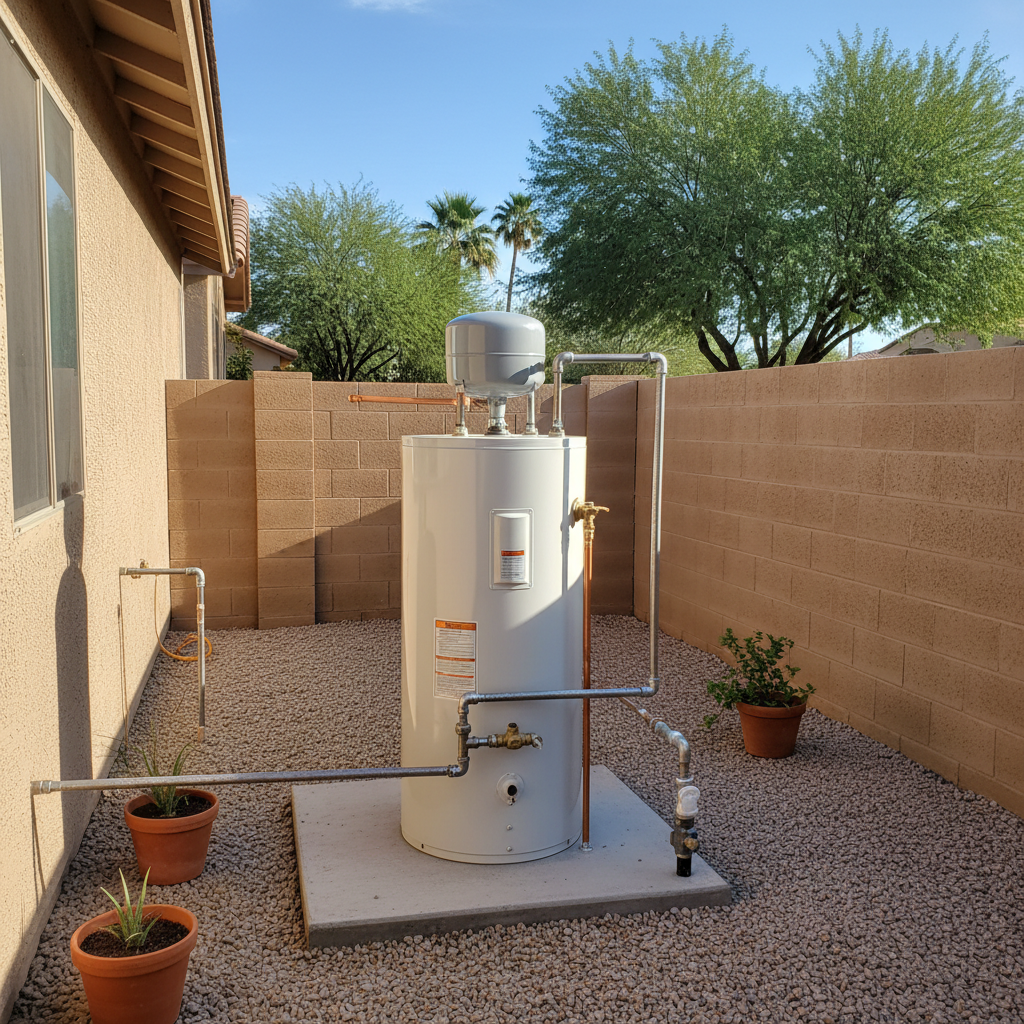
Nobody likes a cold shower, especially not here in Chandler. And let's be honest, replacing a water heater just isn't anyone's idea of a good time on a Saturday. The good news? With just a little bit of care, you can really make your unit last. Honestly, I've seen plenty of water heaters kick the bucket way too soon, all because folks didn't know what to look for or what steps to take. So, let's chat about keeping that hot water flowing smoothly, without any hiccups.
Why Arizona's Climate Is a Big Deal for Your Water Heater
Our desert climate, with its intense heat and often hard water, really puts water heaters through their paces. That constant high temperature in your garage or utility closet means your water heater is working harder than it would in cooler places. And the minerals in our water? Oh, that's a huge factor. It causes sediment to build up, which is basically the silent killer of so many water heaters around here. I've pulled tanks out of homes in older neighborhoods like Sun Lakes that were just packed solid with the stuff.
Easy Maintenance for a Longer-Lasting Unit
You don't have to be a plumbing wizard to do some basic upkeep. Here's what I usually tell people:
Flush the Tank Every Year: This is probably the most crucial thing you can do, especially with our hard water. Sediment settles at the bottom of the tank, which cuts down on efficiency and, eventually, corrodes the tank from the inside out. To do it, just turn off the cold water supply, then kill the power or gas to the heater. Attach a hose to the drain valve and run it to a floor drain or outside. Open the drain valve and let it run until the water comes out clear. You'll probably be shocked at the gunk you see! Do this once a year; maybe twice if you know your water is particularly hard.
Check the Anode Rod: This special rod is designed to corrode instead of your tank, like a sacrifice. Over time, it gets eaten away. If it's completely gone, your tank starts to corrode instead. You can usually find it at the top of the tank. Checking and replacing it is a bit more involved, but it's totally worth doing every 3-5 years. If you're not comfortable with it, that's definitely something Chandler Water Heater can take care of for you.
Inspect the Pressure Relief Valve (T&P Valve): This valve is a critical safety device. It's there to release pressure if it gets too high, preventing a dangerous situation. Once a year, gently lift the lever on the valve for a few seconds until water comes out, then let it snap back into place. If no water comes out, or if it keeps dripping afterward, it likely needs replacing.
Insulate Hot Water Pipes: Even if your tank is in a hot garage, those pipes running through cooler parts of your home can still lose heat. Insulating just the first few feet of hot water pipe coming out of the tank can really help keep your water hotter and cut down on wasted energy.
Warning Signs You Really Shouldn't Ignore
Your water heater usually gives you hints before it completely conks out. Pay attention to these:
No Hot Water, or Not Enough: This one's pretty obvious, right? If you're running out of hot water much faster than usual, or not getting any at all, something's definitely wrong. It could be a heating element, a thermostat, or something much bigger.
Strange Noises: Hissing, rumbling, popping, or banging sounds coming from the tank often point to sediment buildup. That sediment traps water, which then boils and causes all those noises. It's a clear sign your tank is working harder and less efficiently.
Leaking Water: Any water around the base of your water heater is a huge red flag. It might be a loose connection, a faulty valve, or even a crack in the tank itself. A leaking tank usually means it's time for a replacement, sadly.
Rusty Water: If your hot water comes out rusty, that often means the inside of your tank is corroding. That's a serious sign that your water heater's days are numbered.
Smelly or Discolored Water: A metallic smell or taste, or water that just looks off, can mean bacterial growth in the tank or corrosion. Yuck.
When to Call a Pro
Look, I'm all for DIY when it's safe and makes sense. But some things are just better handled by the experts. If you're seeing any of the serious warning signs, like a leak or rusty water, don't wait around. Also, if you're not comfortable with any of the maintenance steps, or if you've tried the basics and the problem just won't go away, it's time to call someone. Dealing with gas lines, high voltage electricity, or a tank that could potentially explode isn't something to mess around with. We're here to help keep your Chandler home safe and your water hot. Don't hesitate to reach out if you have questions or need a hand.